


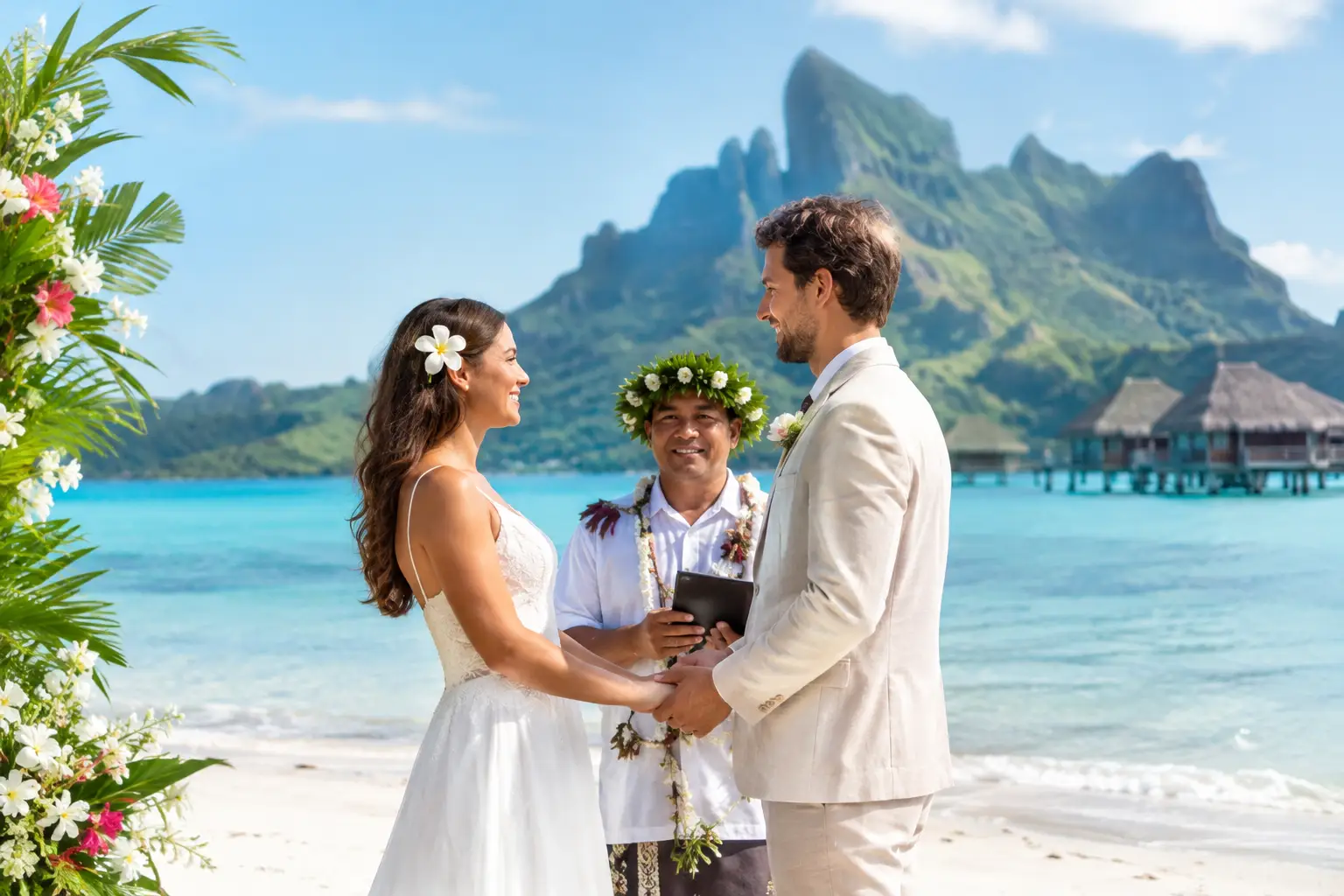
A Tahiti wedding can begin with bare feet in warm sand and end beneath a sky full of stars, but the legal portion happens well before the flower crowns, musicians, and lagoon-side champagne. For a legal destination wedding Tahiti experience, couples need to plan for two distinct moments: the French Polynesian civil ceremony that creates the marriage, and the resort celebration that makes it feel entirely your own.
That distinction is what turns an extraordinary island wedding into a marriage you can confidently bring home. With the right timeline, documentation, and resort team, the practical details do not diminish the romance. They protect it.
What makes a Tahiti wedding legally valid?
Tahiti is part of French Polynesia, an overseas collectivity of France. A legally binding marriage is performed in a civil ceremony by an authorized local official, generally through the town hall or mayor’s office for the commune where the ceremony is arranged. A symbolic ceremony at a resort, on the beach, or beside an overwater bungalow is deeply meaningful, but it is not usually the legal act on its own.
For American couples, a marriage legally completed in French Polynesia is generally recognized in the United States when it was validly performed under local law. Still, marriage recognition and any later name-change process can vary by state and personal circumstance. Couples should confirm their needs with the appropriate local authorities at home, particularly if one partner has been previously married, is changing a name, or has a unique immigration or estate-planning situation.
Same-sex couples can also legally marry in French Polynesia under French law. The paperwork and civil process should be reviewed well in advance with the local wedding coordinator handling the ceremony.
The timing matters as much as the setting
A legal wedding in Tahiti is not a trip to arrange a few weeks before departure. The civil authorities require time to review a complete marriage file and publish the required notice of marriage, known as the banns. While timelines and municipal procedures can change, couples should generally begin the legal planning process several months before travel and expect to submit documents well ahead of the wedding date.
Your resort or destination wedding coordinator will provide the current timetable for the specific commune. This is essential because a ceremony at a Bora Bora resort, for example, may involve different local logistics than a ceremony on Tahiti, Moorea, or another island. Island transfers, town hall hours, holidays, and the availability of officials all influence the final schedule.
For that reason, a legal ceremony works best when it is the anchor of the itinerary, not an add-on. Arrive with a cushion of time before the appointment. A few relaxed days on Tahiti or Moorea before the ceremony can be far more enjoyable than worrying about a delayed international flight or a missed inter-island connection.
Documents for a legal destination wedding in Tahiti
The exact document list is determined by the local town hall and the couple’s individual circumstances. Most American couples can expect to provide valid passports, recent long-form birth certificates, and evidence that they are free to marry. If either partner was previously married, divorce decrees or death certificates may also be required.
Documents frequently need to be certified, authenticated, translated into French, or accompanied by additional declarations. The rules may depend on where the documents were issued and whether they need an apostille. Do not assume that a document used for a U.S. marriage license will satisfy a French Polynesian civil authority. The format, date of issue, and translation requirements can be very specific.
A trusted wedding coordinator should give you a personalized checklist and review every item before it is sent onward. Keep originals and copies organized in a dedicated travel folder, and bring the requested originals with you. It is also wise to carry digital backups in secure storage, but electronic copies do not replace physical documents when an official requests them.
Why a resort coordinator is invaluable
The difference between a dreamy legal wedding and a stressful one often comes down to administration. A local coordinator can explain which documents require French translation, advise on submission dates, communicate with the town hall, arrange witnesses if needed, and schedule the civil ceremony around your resort events.
They can also help shape the experience around the required appointment. Perhaps you sign the legal documents earlier in the day, then exchange personal vows at sunset on a private motu. Or you may prefer a simple civil ceremony followed by a Polynesian blessing, traditional music, floral leis, and a private dinner on the beach. The legal details are handled with care, while the celebration still feels like paradise.
Choosing the right island and resort experience
Tahiti is often the arrival point for international flights and can be a practical place to complete a civil ceremony. It also offers dramatic black-sand beaches, lush mountains, and sophisticated resort settings close to Papeete. For couples drawn to quiet lagoons and a more intimate pace, Moorea offers a beautiful next chapter, with scenic peaks, beachfront villas, and easy access from Tahiti.
Bora Bora remains the iconic choice for a celebration after the paperwork is complete. Its crystal-clear lagoon, legendary Mount Otemanu views, and private overwater bungalows create an unforgettable setting for newlyweds. A wedding itinerary can also extend to Taha’a for vanilla-scented tranquility, Huahine for a more traditional Polynesian atmosphere, or the Tuamotu Islands for extraordinary diving and remote atoll beauty.
The right resort depends on the wedding size and the kind of privacy you want. A couple planning an elopement may value an intimate overwater bungalow, breakfast delivered by canoe, and a candlelit dinner for two. A larger group may need a property with multiple room categories, private event spaces, group dining options, and dependable transportation coordination.
Do not choose solely by photographs of the lagoon. Consider meal plans, guest transfers, inter-island baggage limits, villa capacity, accessibility, weather contingencies, and how far the ceremony location is from the accommodations. These details are where a specialist turns a beautiful idea into a trip that feels effortless.
Legal ceremony or symbolic ceremony: Which is right for you?
A legal Tahiti wedding is ideal for couples who want the emotional and official milestone to happen in the islands. It is especially appealing if you are comfortable committing time to document preparation and building a longer stay around the civil requirements.
A symbolic ceremony can be the better choice for couples who want greater flexibility. Many marry legally at home first, then hold the vows, rings, Polynesian blessing, and reception in French Polynesia without the pressure of international marriage paperwork. This route can also make planning easier for guests who are arriving on different flights or staying for only a few nights.
Neither choice is less romantic. The question is whether you want your legal anniversary to be the day you stand together on a Tahitian beach, or whether you prefer to reserve that moment entirely for the celebration. For some couples, signing papers quietly at home creates more freedom to be present in the islands. For others, the meaning of making it official in Tahiti is worth every document and deadline.
Build the wedding trip around the celebration
A destination wedding should give you time to be more than event hosts. Consider arriving on Tahiti, completing the legal appointment, then continuing to Moorea or Bora Bora for several unhurried nights as newlyweds. Guests can enjoy snorkeling, lagoon cruises, island tours, and spa time, while the couple has room for private dinners and quiet mornings over the water.
Airfare-inclusive packages can simplify the bigger picture by pairing international flights, inter-island arrangements, resort stays, transfers, meals, and selected amenities. South Pacific Vacations can help couples compare properties and build an itinerary that respects the civil timeline while leaving plenty of space for the magic: a flower-filled ceremony, the soft rhythm of Polynesian drums, and your first sunrise as a married couple over the lagoon.
Start the paperwork early, then give yourselves permission to savor the reason you chose Tahiti in the first place. The legal ceremony may be carefully scheduled, but the memory should feel beautifully unhurried.